From AI to SI: How the US-China Tech Race Is Driving Up Global Cloud Infrastructure Costs
Foreword
On September 29, 2026, President Donald Trump signed an executive order titled “Inaugurating the Era of Super Intelligence,” directing US federal agencies to replace the terms “Artificial Intelligence” and “AI” with “Super Intelligence” and “SI” in official correspondence, public communications, websites, reports, and administrative policy documents. The order argued that today’s frontier systems “do much more than imitate or automate discrete aspects of human intelligence”.
The name change is symbolic, but the underlying context is not. It reflects a technology race between the United States and China that is no longer just about model performance. It is about compute, memory, and the cost of the infrastructure that runs AI workloads. This article traces how that race is driving up cloud infrastructure costs worldwide, and what it means for anyone who needs to buy a server.
Demand: China’s AI usage surge
The scale of AI demand from China has shifted the global balance. OpenRouter data shows that China’s large language models outpaced their US counterparts in weekly usage for 22 consecutive weeks, processing 62.22 trillion tokens from September 21 to September 27, 2026, compared to 14.2 trillion generated by US models. By the end of September, Chinese models accounted for approximately 65 percent of token consumption on the platform, up from 22 percent in January, while the US share dropped from 65 percent to 31 percent.
This surge is not driven by a single model. DeepSeek’s V4.1 Flash held the top spot with 19.6 trillion tokens, followed by Z.ai’s GLM 5.3 Flash at 16.3 trillion, and Tencent’s Hy4 preview at 9.64 trillion. The pattern suggests that Chinese developers have moved beyond individual model performance into full-chain engineering capability: faster release cycles, broader platform distribution, and lower inference costs that translate technical improvements into actual developer adoption more quickly.
China’s cost advantage is substantial. Chinese providers have offered price discounts of approximately 80 percent compared to US peers, which pushed token usage up 67 times while mixed unit prices nearly halved. Intel CEO Lip-Bu Tan noted that the token costs of Chinese frontier AI models were “significantly lower” while performance remained satisfactory. This price differential means more AI workloads are being served from Chinese infrastructure providers, amplifying demand for their compute and storage capacity.
Supply: The hardware cost crunch
The demand surge has collided with a memory supply chain that cannot keep up. Data center demand for DRAM surged to approximately 50 percent of global consumption in 2025, up sharply from 32 percent five years earlier. Memory chip makers have prioritized advanced process capacity for HBM and server DRAM, squeezing traditional consumer-grade DRAM and NAND production.
The price impact has been severe. DRAM contract prices for DDR4 rose 24 percent in three months, and DDR5 rose 20 percent, according to Barclays data. Nanya Technology reported that its third-quarter 2026 DRAM average selling prices surged over 60 percent quarter-over-quarter, with gross margin hitting 85.7 percent. The cumulative price increase for memory chips has exceeded 300 percent over the past year or so.
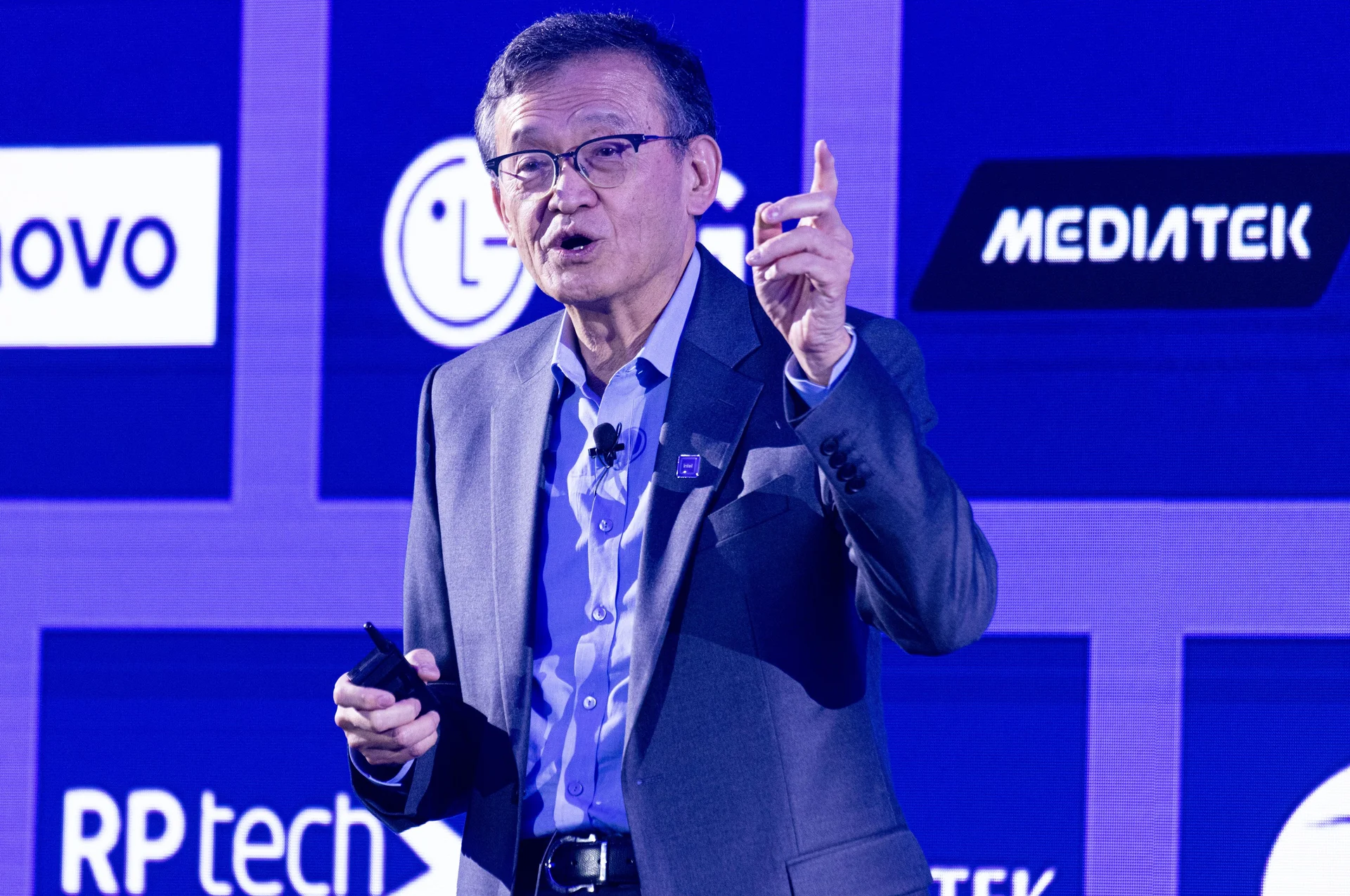
This is not a short-term fluctuation. Intel CEO Lip-Bu Tan stated at a DBS Bank conference in Singapore on October 12 that AI hardware will remain in short supply for the next two to three years, driven by persistent constraints in the underlying technology supply chain. Barclays analysts warn that Micron’s memory shortage will run through 2028. New fabrication plants take two to three years to build, meaning capacity additions lag far behind the demand curve.
The transmission: From hardware to cloud pricing
The cost pressure from hardware has worked its way through to cloud service pricing.
Alibaba Cloud announced in March 2026 that it would increase prices for AI computing and storage products by as much as 34 percent, citing an “explosion” in global AI demand and rising supply chain costs. Tencent Cloud adjusted prices for GPU cloud servers and GPU-based container and big data services by 5 percent across all regions starting May 9. Baidu Smart Cloud raised prices for AI computing products by 5 to 30 percent. AWS raised its EC2 Capacity Blocks for ML prices by approximately 15 percent in January, with the p5e.48xlarge instance going from $34.61 to $39.80 per hour.
In Europe, Hetzner implemented a broad price adjustment effective June 15, 2026. Cloud server prices in US data centers increased by an average of 158 percent, with some instances tripling in monthly cost. German data centers saw an average increase of 99 percent, and Singapore about 78 percent. The reason cited was “extremely high procurement costs for new hardware”.
Data transfer and networking services have become a key pressure point in this round, with hikes typically ranging from 10 percent to 40 percent across major providers including AWS, Google Cloud, Microsoft Azure, and Tencent Cloud.
Industry analysts note that this marks a structural shift. The cloud computing market had experienced nearly two decades of declining prices driven by technological progress and scale effects. The AI era has reversed that trajectory, with demand growth and supply-side cost increases pushing cloud services into a phase of value reassessment and repricing.
What this means for cloud server buyers
The combination of rising hardware costs and broad cloud price increases has several implications for anyone procuring cloud servers or VPS capacity.
Prices are unlikely to fall in the near term. Intel’s CEO forecasts two to three years of hardware shortage. New memory fabrication capacity will not meaningfully arrive before 2028. The cost pressure on cloud providers is structural, not cyclical.
Renewal pricing is a risk. Providers that offer promotional first-year pricing may adjust renewal rates upward as their own costs rise. Checking whether a provider offers recurring price locks is more important than ever.
Hardware cost sensitivity varies by workload. Memory-intensive workloads (large language model inference, databases, caching layers) will feel the cost pressure more than CPU-light, storage-light workloads. Workloads that can run on older generations or with smaller memory footprints have more pricing flexibility.
Provider selection matters more than before. In a market where nearly every major provider has raised prices, the differentiator is not the headline rate but the contract structure: whether prices are locked, whether bandwidth and egress are included, and whether the provider controls its own infrastructure or passes through third-party cost increases.
A note on infrastructure control
One factor that affects how much of the hardware cost increase reaches the customer is whether the provider owns its data center infrastructure. Providers that lease capacity from third parties and resell it have less flexibility to absorb cost increases. Providers that operate their own facilities and control their hardware supply chain have more room to manage pricing.
VMRack is a brand under EasyLink, and it has its own infrastructure in the Equinix LA4 data center in Los Angeles. The company offers US VPS, bare metal servers, CDN, and object storage as integrated services. It controls its infrastructure from the physical layer up, which provides more stability in pricing than providers that depend on third-party capacity. For teams that need predictable cloud server costs during a period of broad market price increases, VMRack’s service portfolio is worth considering.
Summary
The US-China AI race has moved beyond model benchmarks into an infrastructure competition. China’s surge in AI usage — 65 percent of OpenRouter token consumption by September 2026 — has amplified demand for compute and memory. The hardware supply chain has not kept pace, with DRAM prices rising sharply and Intel forecasting a two-to-three-year shortage. Cloud providers have passed these costs on to customers: Alibaba Cloud raised AI product prices by up to 34 percent, Tencent Cloud raised GPU services by 5 percent, AWS raised ML capacity block prices by 15 percent, and Hetzner increased US cloud server prices by an average of 158 percent.
For cloud server buyers, the practical implications are clear: expect higher prices for the foreseeable future, scrutinize renewal terms, and prioritize providers that control their own infrastructure and offer predictable pricing.
Thank you very much for reading to the end!